Sponsored by the Padnos Family Foundations.

Program

Saturday, March 22, 2025, 7:30 p.m.
Jack H. Miller Center for Musical Arts, Hope College

Johannes Müller Stosch, Music Director and Conductor

Hebrides Overture, Op. 26,  “Fingal’s Cave”
Felix Mendelssohn (1809-1847)
Introduction and Rondo Capriccioso, Op. 28
Camille Saint-Saëns (1835-1932)

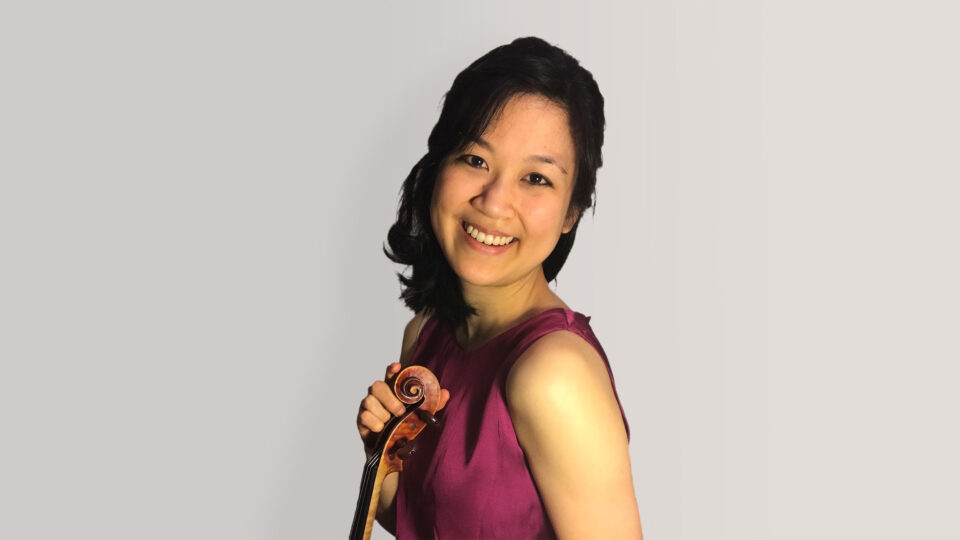
Letitia Jap, violin

“Andante moderato” from String Quartet in G major
Florence Price (1887-1953)
Symphony No.3 in A major, op.56 “Scottish”
Felix Mendelssohn (1809-1847)

Andante con moto - Allegro un poco agitato
Vivace non troppo
Adagio
Allegro vivacissimo — Allegro maestoso assai

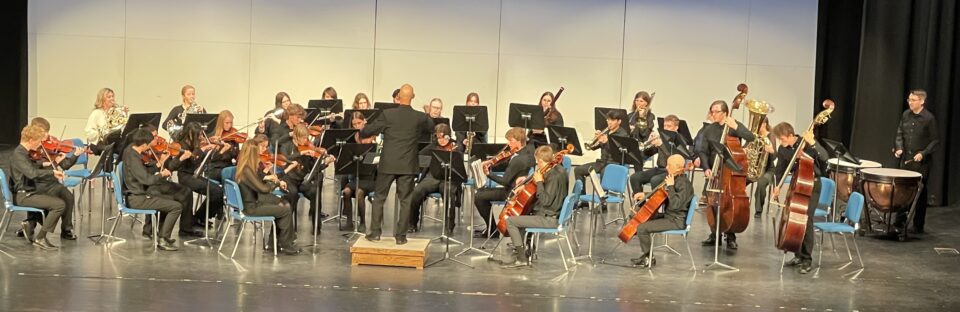
The "Scottish Influence" concert will be performed on Saturday, March 22, 2025, 7:30 p.m. at the Jack H. Miller Center for Musical Arts, Hope College, conducted by Johannes Müller Stosch, Music Director. The concert open's with Felix Mendelssohn's musical depiction of The Hebrides and concludes with his Scottish Symphony will be Florence Price's beautiful Andante Moderato for strings will be followed Camille Saint-Saëns's Introduction and Rondo and Capriccioso, performed by Letitia Jap, violinist.

Tickets are $29 for adults and $10 for students through college.

Learn more about the music…

We will be hosting not only the Classical Chat series at Freedom Village, but also Pre-Concert Talks!  Details below:

Classical Chats at Freedom Village:  These informative and fun talks are led by Johannes Müller-Stosch and take place at 3:00pm on the Thursday before each Classics concert.  (Freedom Village, 6th Floor Auditorium, 145 Columbia Ave.)

Pre-Concert Talks:  These talks, led by Johannes Müller-Stosch and Amanda Dykhouse, are online under the "Pre-Concert Talk" Tab.  

New to the Symphony?  Check out the Frequently Asked Question page…

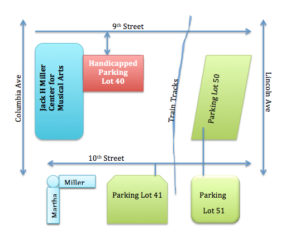
Parking Map at the Miller Center

Holland Symphony Orchestra will reserve and monitor Lot 40 for handicapped parking.  The faculty parking lots are available for parking after 5pm

Felix Mendelssohn
Born: February 3, 1809, Hamburg
Died: November 4, 1847, Leipzig

The Hebrides, “Fingal’s Cave,” Op. 26
Written: 1830
Premiered: May 14, 1832, London
Approximate Duration: 10 minutes
Instrumentation: 2 flutes, 2 oboes, 2 clarinets, 2 bassoons, 2 horns, 2 trumpets, timpani, strings

Symphony No. 3 in A minor, Op. 56, "Scottish"
Written: 1829-42, rev. 1843
Premiered: March 3, 1842, Leipzig
Approximate Duration: 40 minutes
Instrumentation: 2 flutes, 2 oboes, 2 clarinets, 2 bassoons, 2 horns, 2 trumpets, timpani, strings
Music donated by Mark Dykstra.

Scotland was the inspiration for a lot of nineteenth century art and music in France and Germany.  It seemed exotic–far away, mysterious, full of picturesque and rugged landscapes, rainy and misty, and inhabited by people wearing kilts and plaids and speaking in the seemingly unintelligible Gaelic language.  Many students, writers, and artists traveled there seeking inspiration from this beautiful and foreign place.  

In 1829 Mendelssohn’s father sent him on a tour of Europe to complete his education and gain cultural understanding.  This was common for young men of fortune at the time.  Mendelssohn and a friend began their travels in England and Scotland.  In Edinburgh they immersed themselves in the stories of Queen Mary and her personal secretary, David Rizzio.  Mendelssohn wrote, “We went to the palace of Holyrood where Queen Mary lived and loved. There is a little room to be seen there with a winding staircase leading up to it. This, the murderers ascended and, finding Rizzio, drew him out. Three chambers away is where they killed him . . . Everything is broken and moldering and the bright sky shines in. I believe I found today in the old chapel the beginning of my Scottish Symphony.”  As they traveled farther north, Mendelssohn wrote that the Scottish highlands “brew nothing but whiskey, fog, and foul weather.”  Eventually they made their way to the west coast of Scotland and to the island of Jaffa.

Fingal's Cave is on the uninhabited island of Jaffa in the inner Hebrides.  The cave has a giant arched roof and is filled with the eerie sounds produced by the breaking waves. Its Celtic name means “cave of melody.”  Many Romantic artists and writers travelled there.  Sir Walter Scott’s reaction was typical: “…one of the most extraordinary places I ever beheld. It exceeded, in my mind, every description I had heard of it….  composed entirely of basaltic pillars as high as the roof of a cathedral, and running deep into the rock, eternally swept by a deep and swelling sea, and paved, as it were, with ruddy marble, baffles all description.”  

After seeing the stunning scenery Mendelssohn composed the opening bars of his overture and sent it to his sister Fanny, saying, “In order to make you understand how extraordinarily the Hebrides affected me, I send you the following, which came into my head there.” He continued to work on the overture as he traveled, finally completing it a year later in Rome. It premiered in London in 1832.  Critics, including Wagner and Schumann, praised the overture as a masterpiece. Mendelssohn originally entitled it “The Lonely Island,” but soon changed the name, rather confusingly using the title “Hebrides Overture” on the orchestral parts but “Fingal’s Cave” on the full score. 

Mendelssohn’s work was a new type of overture which emerged during the nineteenth-century, referred to as the concert overture.  These overtures are not drawn from a stage work or opera, but rather, are stand-alone works to be programmed as an opening piece in a concert hall.  Mendelssohn’s Hebrides Overture evokes a whole seascape including the grandeur of the cave, the swelling of the sea, the light on the water and the fury of the waves breaking on the cliffs. It was one of the first works of music to evoke nature in this way, a hallmark of the emerging romanticism of Mendelssohn’s time, and remains one of the greatest of its genre.

Though Mendelssohn sketched the opening phrase of what would become his “Scottish Symphony” on his travels, he did not focus on this piece until 1841.  Later on his trip, in Rome in 1831, he wrote that he could not “find his way back into the Scottish fog mood.”  For the next decade he wrote two symphonies (the "Italian" and "Reformation"), two piano concertos, an oratorio, several books of “Songs Without Words,” and much of his chamber music.  He returned to his Scottish symphony while conducting in Berlin.  The piece opens with a brooding and somber introduction.  The main theme is introduced by the clarinet and violins.  After a song-like second theme, a stormy development leads to a stormier recap of the main themes.  Mendelssohn had a gift for portraying places through his music, and these sweeping melodies, introspective lyrical moments, and tumult evoke the ancient ruins, grand landscapes, and powerful storms of Scotland.  

The second movement follows the first movement without pause.  This vivacious scherzo recalls Scottish folk dances, traditional Scottish music, and celebratory gatherings.  This unfolds into the slow movement, which goes back and forth between a lyrical melody and a more ominous mood.  Here listeners can experience Mendelssohn’s gift for melody.  He seemingly invites listeners into a space that is tender, introspective, and nostalgic, as if he is dreaming of the romantic lure of Scotland’s old legends and history.  Mendelssohn labels the fourth movement “Allegro guerriero,” literally referring to war and soldiers.  It is fiercely energetic, animated by a Scotch snap.  The music and frenzied energy build in grandeur and celebration to a climax that flows into a final noble hymn, leaving audiences full of awe, triumph, and joyful solemnity. 

To watch a video of Hebrides Overture, click here.

To watch a video of Symphony No. 3, "Scottish," click here.

“Andante moderato” from String Quartet No. 1 in G Major
Florence Price
Born: Little Rock, Arkansas, April 9, 1887
Died: Chicago, Illinois, June 3, 1953
Written: 1929
Arranged: Peter Stanley Martin
Approximate duration:  7 minutes
Instrumentation: strings

Florence Price was born in Little Rock, Arkansas.  Her mother was a music teacher and her father was the only African-American dentist in the city.  Even though Little Rock had lots of racial issues, the family was well-respected.  Florence’s mother guided her early musical studies.  At age four she performed for the first time on the piano, and published her first composition at age eleven.  After graduating high school as valedictorian at age fourteen, she attended New England Conservatory in Boston, majoring in organ and piano teaching.  She also studied composition.

Upon her graduation in 1906, Price taught piano instruction at Clark Atlanta University, becoming head of the music department.  She eventually got married and moved back to Little Rock, where she raised two daughters.  She had trouble finding work in that segregated town.  After a series of racial incidents, including a lynching in 1927, the Price family moved to Chicago.  Price met a lot of other musicians there and began her composition career.  She also worked for a time as an organist for silent film showings.  She studied with many of the city’s leading teachers, spending time at Chicago Musical College, University of Chicago, and American Conservatory of Music, and became part of the Chicago Black Renaissance.  Ultimately she composed over 300 works.  In 1932 she became the first African American woman to have a work played by a major orchestra when the Chicago Symphony played her first symphony.  Chicago honored her in 1964 by naming an elementary school after her.

After she died, much of Price’s work fell out of favor as new styles emerged.  A lot of her music was lost until the 2009 discovery of over 200 pieces in an abandoned house outside St. Anne, Illinois, that Price used as a summer home late in her life.  Her two-movement String Quartet No. 1 was one of those pieces.  In recent years many of her works have been re-published or published for the first time.  Many orchestras, in an effort to recognize underrepresented composers, have helped audiences discover and enjoy her delightful music.

Price drew heavily on the American musical sounds that surrounded her.  She was a devoted Christian and used  a lot of spirituals–both their melodic sounds and rhythms–in her symphonic pieces.  Many of her works focused on the experience, folk songs, and dances of Black Americans.  This movement from her first string quartet brings together European classical traditions and elements of African American spirituals.  She draws on the harmonic language of Antonín Dvořák and other romantic composers, but the melodic language is based in American folk songs and spirituals.  It begins in an improvisatory and lyrical manner before some spritely music marked by pizzicato and a final section that sounds like a folk dance.  

To watch a video of “Andante moderato” from String Quartet No. 1 in G Major, click here.

Introduction and Rondo Capriccioso, Op. 23
Camille Saint-Saë
ns
Born: October 9, 1835, Paris
Died: December 16, 1921, Algiers
Written: 1863
Premiered: April 4, 1867, Paris, Pablo Sarasate
Approximate Duration: 10 minutes
Instrumentation: 2 flutes, 2 oboes, 2 clarinets, 2 bassoons, 2 horns, 2 trumpets, timpani, strings
Music donated by Mark Dykstra.

Camille Saint-Saëns was one of the most talented musical child prodigies of all time.  He began piano lessons with his great-aunt at age two and composed his first piece at age three.  His precociousness was not limited to music; he could read and write by the time he was three, and learned Latin four years later.  On his first public performance, at age five, he accompanied a Beethoven violin sonata.  At his formal debut at age ten he dazzled a Parisian audience with an extremely difficult piano program.  As an encore he offered to play any of Beethoven’s thirty-two piano sonatas from memory.  He wrote his first symphony at age sixteen.  From there he continued to perform and compose, and his abilities were legendary all over Europe and even in America.  He was as skilled on the organ as he was on the piano, and served as the organist of Paris’ most prestigious church, La Madeleine, for nineteen years.

When Saint-Saëns was twenty four, the fifteen year old Spanish violin virtuoso Pablo Sarasate (1844–1908) commissioned a violin concerto from him.  Four years later Saint-Saëns wrote another piece for Sarasate, Introduction and Rondo Capriccioso, also designed to feature Sarasate’s impressive technique.  The piece opens slowly, in the style of an operatic recitative.  It is sentimental, reflective, occasionally showy, and casts the soloist in the role of a coloratura soprano.  The faster rondo section showcases a wide range of violin techniques.  It has a slightly Spanish flavor, in honor of Sarasate.  There are two main themes–one lyrical and one fast and leaping.  A brief cadenza leads to an even more dazzling coda.  

To watch a video of Introduction and Rondo Capriccioso, click here.

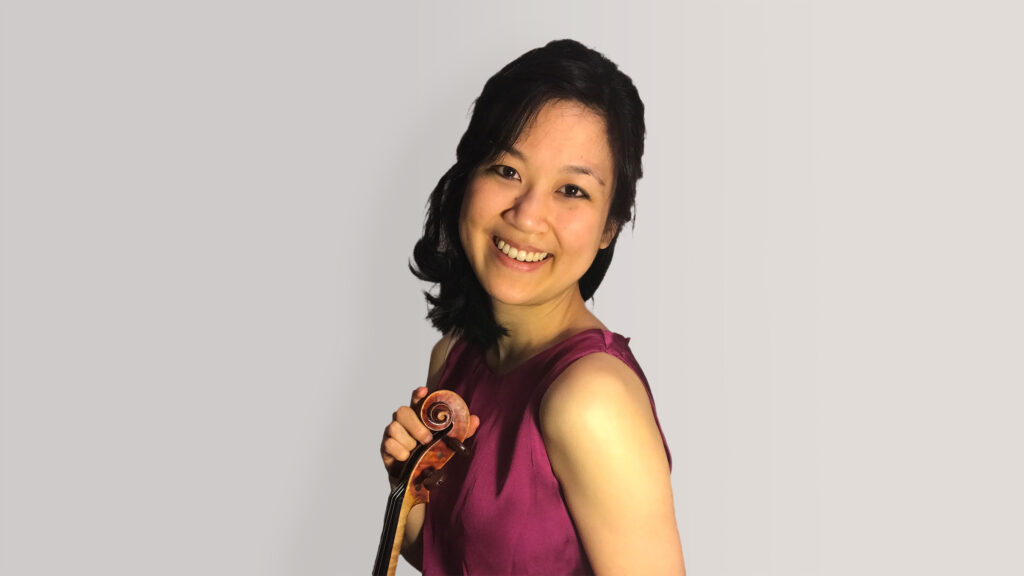
Letitia Jap, violinist, enjoys a career as a performer and educator. She finds most joy using music to connect with people and makes it her life mission to create programs or platforms that will help people engage with music in fun and accessible ways.

Winning numerous concerto competitions, Letitia has been a featured soloist with orchestras like the Seattle Symphony, Austin Civic Orchestra, Bellevue Philharmonic Orchestra, and has performed solo recitals at festivals such as the Chelsea Music Festival, Lake George Music Festival, and the 21st Century Artist Initiative.

Additionally, Letitia has served as concertmaster with the Seoul International Community Orchestra in 2017, the Boston Chamber Orchestra from 2015-2016, Masterworks Music Festival in 2013, and various other orchestras since 2008. She also performed with orchestras such as Boston Philharmonic Orchestra, Seattle Symphony Orchestra, and Masterworks Festival Orchestra. 

Letitia also maintains an active schedule as an educator, hoping to inspire the next generation of musicians. Her experience draws on years spent teaching at the University of Texas String Project Program in Austin, Texas and at the New England Conservatory Preparatory School in Boston, Massachusetts. In Boston, she was an ensemble coach for the Greater Boston Asian American Symphony Orchestra and served on faculty for Youth and Family Enrichment Services Inc., teaching music to children from a lower-income, Haitian community. Currently, Letitia is a member of the Suzuki Association of the Americans. Letitia was Head Chamber Ensemble Coach at the University of Rochester, held two teaching assistant positions at the Eastman School of Music, faculty at the Eastman Community Music School, was Music History Lecturer at Nazareth College, and Artist in Residence at Hong Kong Baptist University. She is currently Affiliate Faculty of Violin at Grand Valley State University.

Letitia received her Bachelor of Music from the University of Texas at Austin, her Master of Music from the New England Conservatory, and her Doctorate of Musical Arts at the Eastman School of Music.

In her free time, she enjoys reading, eating good food, exploring different cities, and watching Shark Tank. 

To learn more, visit https://www.letitiajap.com/

To watch the pre-concert video, click here.

[INSERT_ELEMENTOR id="7643"]
March 20, 2024

Scottish Influence

The Scottish Influence concert will be performed on Saturday, March 22, 2025, 7:30 p.m. at the Jack H. Miller Center for Musical Arts, Hope College. The concert concluding with Mendelssohn's Scottish Symphony will be conducted by Johannes Müller Stosch, Music Director. Letitia Jap, violinist, will perform Saint-Saëns Rondo and Capriccioso.
March 20, 2024

Home for the Holidays (7:30pm)

Concert Sponsor: Pat & Camy Thompson. This Holiday Concert will be held Saturday, December 14, 2024, 7:30 p.m. Dimnent Chapel, Hope College with guest soprano Jennie Judd Reyes. Johannes Muller Stosch will conduct this family favorite of seasonal holiday music, sing-a-long and familiar carols.
March 20, 2024

Home for the Holidays (3:30pm)

Concert Sponsor: Pat & Camy Thompson. The Holiday Concert will be held Saturday, December 14, 2024, 3:30 p.m. Dimnent Chapel, Hope College with guest soprano Jennie Judd Reyes. Johannes Muller Stosch will conduct this family favorite of seasonal holiday music, sing-a-long and familiar carols.
March 20, 2024

Sounds of the Sea

The concert on Saturday, November 2, 2024, 7:30 p.m. at the Jack H. Miller Center for Musical Arts, Hope College will feature the return to Holland of another of our favorite artists, Andrew Le, pianist performing Ravel's Piano Concerto in G Major with Johannes Müller Stosch, Music Director and Conductor conducting. The major work will be Debussy's La Mer.
January 26, 2024

Romantic Rachmaninoff

Concert Sponsor: George and Sibilla Boerigter. Named for the Rachmaninoff Second Symphony, the concert will be Saturday, April 26, 2025, 7:30 p.m. at the Jack H. Miller Center for Musical Arts, Hope College. Johannes Müller Stosch, will conduct the final concert of the 24-25 season and young cellist, Cameron Renshaw, will perform the Bruch Kol Nidre.
January 14, 2024

An American in Paris

Concert Sponsor: In memory of Floyd Farmer. An American in Paris, opening concert of the 24-25 season, will be held Saturday, September 14, 2024, 7:30 p.m. Jack H. Miller Center for Musical Arts, Hope College, Johannes Müller Stosch, Music Director. Organ virtuoso Christpher Houlihan will perform Barber's Toccata Festiva for Organ and Orchestra.
December 28, 2023

Link Up – The Orchestra Moves

Link Up Concerts are not open to the public but are produced free for the greater Holland area fourth grade students and their teachers as a culmination event with Holland Symphony. Students perform the music and skills they have learned throughout the year. Link Up, a program by Carnegie Hall's Weill Music Institute, collaborates with local orchestras, schools, and communities in a year-long curriculum that explores orchestral repertoire and fundamental musical skills. Students, primarily fourth-graders, learn singing, recorder playing, listening skills, and gain knowledge about the orchestra and instrument families, along with engaging in creative work and composition.
December 28, 2023

HSYO Spring Concert

Join us for the spring concert of the Holland Symphony Youth Orchestras. Tickets are only sold at the door. There are three levels of experience in HSYO: Holland Area Youth Orchestra is a full orchestra of high school age, Holland Area Chamber Strings is a middle school string orchestra, and Holland Area Junior Strings is a beginning string orchestra. The Holland Symphony Youth Orchestras aim to foster a culture of excellence, providing students with opportunities for growth in musicianship through individual and ensemble practice. The objectives include exploring diverse musical styles, enhancing aesthetic awareness through the performance of standard orchestral repertoire, building self-discipline, promoting a commitment to excellence, and strengthening connections with the broader Holland community and schools through music outreach.
December 26, 2023

Young Artists Competition Public Recital

**Rescheduled! Please note the new date!** On January 27, 2024, at 1:00 PM, witness the musical brilliance of eleven high school students competing in the Holland Symphony Orchestra’s Norbert Mueller Young Artist Competition/Recital. Admission is free. In a recital format, audience members can enjoy the students' accomplished performances. Judges will select three winners, awarding prizes from $500 to $150. The competition, a unique showcase of young talent from various schools playing diverse instruments, is underwritten by an endowment from the legacy of Norbert Mueller, a former Chicago Symphony violinist and advocate for young musicians. The Holland Symphony Orchestra proudly honors Mueller's legacy with this special event.